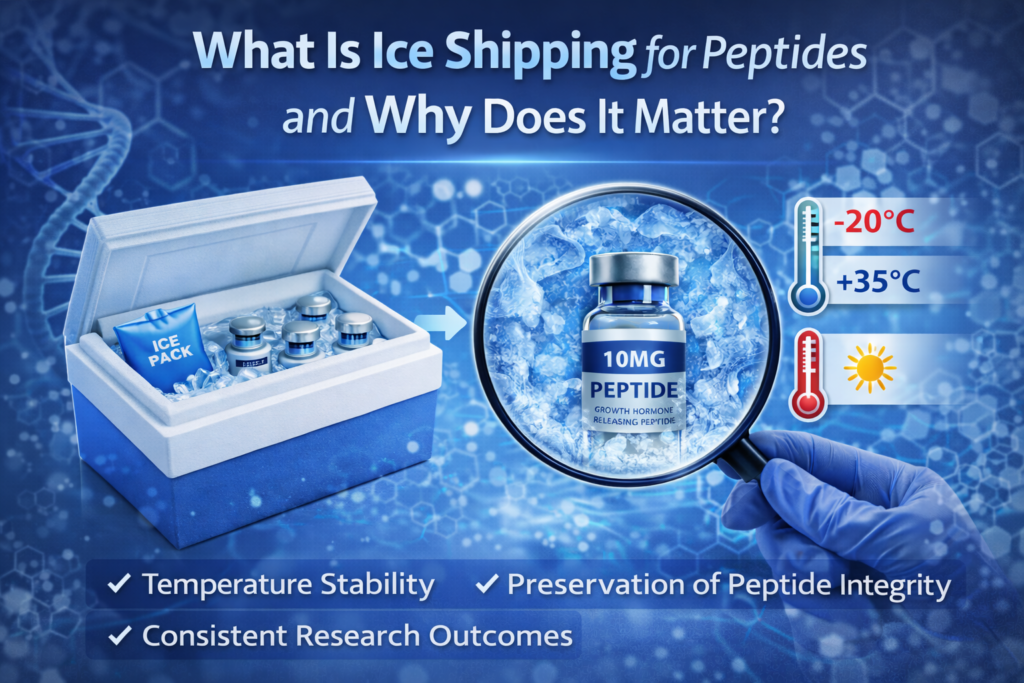
What Is Ice Shipping for Peptides?
Ice shipping, also known as cold-chain delivery or temperature-controlled shipping, refers to a logistics method in which peptide vials are packaged with cooling materials (such as gel packs or dry ice) to maintain a stable low temperature throughout transit. This protects peptide integrity from the moment they leave the warehouse until they reach your laboratory.
Why Temperature Matters for Peptides
Peptides are sensitive molecules. Elevated temperatures during transit can accelerate hydrolysis, oxidation, and aggregation, all of which degrade the compound before it even reaches your lab. While lyophilised (freeze-dried) peptides have considerably better ambient stability than reconstituted ones, extended heat exposure — particularly during European summer months when temperatures regularly exceed 30°C — can still compromise purity and potency.
How Ice Shipping Works
When ice shipping is applied, each order is packed in an insulated box or mailer with appropriate cooling inserts. Gel packs are the most common for standard temperature maintenance (0–8°C). Dry ice may be used for products requiring sub-zero transit temperatures. The packaging is tested to maintain safe temperatures for a defined transit window, typically 24–72 hours depending on the material used.
When Is Ice Shipping Necessary?
For lyophilised research peptides, ice shipping is strongly recommended during warm months (typically May–September in Europe) and for any long-distance international shipping. For reconstituted or pre-dissolved peptides, cold-chain delivery is essential regardless of season. Some peptides with particularly sensitive chemical structures (e.g., disulfide bridges, phosphorylations) benefit from ice shipping year-round.
The Risk of Shipping Without Temperature Control
Packages left in transit vehicles, warehouses, or post offices can experience temperatures of 40°C+ during summer. Even brief exposure to such temperatures can initiate irreversible degradation. Without cold-chain packaging, you may receive a vial that looks identical to a properly shipped one but has reduced purity and altered activity. A supplier who does not offer ice shipping is taking a significant risk with your research investment.
How Peptifly Handles Cold-Chain Delivery
Peptifly offers ice shipping on all orders to protect peptide integrity during transit across Europe. We dispatch from EU-based fulfilment centres, routing from the warehouse closest to your location to minimise transit time. Orders placed before 2PM receive same-day dispatch, further reducing the time your peptides spend in the delivery chain. Tracking information is sent automatically so you can monitor your order in real time. Browse our full catalogue at peptifly.com/shop.
Frequently Asked Questions
Is ice shipping necessary for lyophilised peptides?
While lyophilised peptides are more stable than reconstituted forms, ice shipping is strongly recommended during warm months and for long-distance shipments to protect purity and potency.
How long does the ice packaging stay cold?
Depending on the cooling material used, insulated gel-pack packaging maintains temperatures for 24–72 hours. Same-day dispatch and express shipping options ensure peptides arrive within this window for most European destinations.
What is the difference between gel packs and dry ice for peptide shipping?
Gel packs maintain temperatures of approximately 2–8°C, suitable for most lyophilised and refrigerated peptides. Dry ice achieves sub-zero temperatures and is used for compounds requiring frozen transit.
Disclaimer: All peptides sold by Peptifly are strictly for research and laboratory use only. This article is for informational purposes only.