Introduction
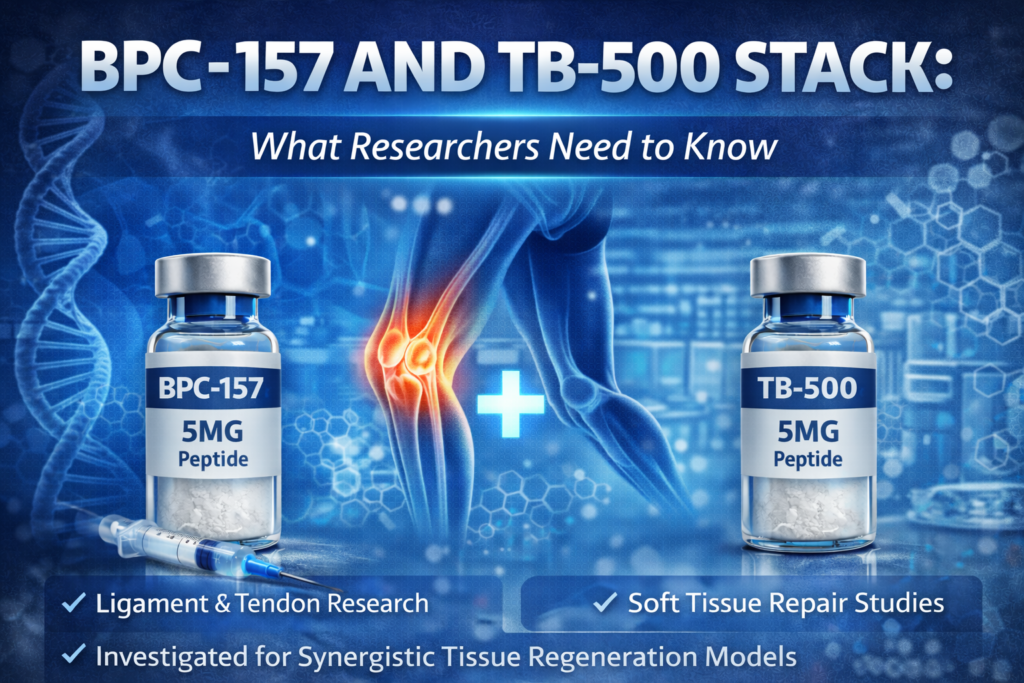
BPC-157 and TB-500 are two of the most extensively researched peptides in the area of tissue repair and recovery. While they are distinct compounds with different mechanisms of action, they are frequently studied together due to their complementary activities at the cellular and systemic levels. This article provides a research-focused overview of each compound and the rationale for studying them in combination.
BPC-157: Overview
BPC-157 (Body Protection Compound-157) is a synthetic pentadecapeptide comprising 15 amino acids, derived from a sequence found in human gastric juice. It has been studied across a wide range of animal model experiments, with research suggesting roles in gastrointestinal function, tendon and ligament biology, neurological pathways, and wound healing. BPC-157 is notable in the research literature for its apparent systemic effects even when administered remotely from the site of injury, suggesting it may act through central or vascular mechanisms.
TB-500: Overview
TB-500 is a synthetic analogue of Thymosin Beta-4, a naturally occurring peptide found in high concentrations in blood platelets, wound fluid, and many cell types. Research on Thymosin Beta-4 and its analogues has focused on actin sequestration and cytoskeletal organisation, angiogenesis, inflammation modulation, and tissue regeneration. The TB-500 sequence is the biologically active fragment of Thymosin Beta-4 most associated with these activities in research models.
Complementary Mechanisms
The rationale for studying BPC-157 and TB-500 together lies in their mechanistic complementarity. BPC-157 appears to act strongly on growth factor signalling and vascular formation, while TB-500 influences actin polymerisation and cell migration. Together, these mechanisms may address multiple phases of the tissue repair cascade simultaneously, from early inflammatory response through matrix remodelling and vascularisation.
Research Applications
Published preclinical research on BPC-157 spans more than 100 peer-reviewed studies, covering models of tendon injury, gut inflammation, bone repair, and neurological damage. TB-500 research, meanwhile, has generated significant interest in cardiac, ocular, and dermal tissue repair models. These compounds are among the most actively researched peptides in the regenerative biology field.
Storage and Sourcing
Peptifly offers a BPC-157/TB-500 pre-blended vial (10mg), lyophilised for maximum stability, independently tested for 99%+ purity, and dispatched from EU warehouses with cold-chain packaging. Browse at peptifly.com/shop.
Frequently Asked Questions
What is BPC-157?
BPC-157 is a synthetic 15-amino acid peptide derived from a gastric juice protein sequence. It is widely studied in preclinical models for its apparent tissue repair and cytoprotective properties.
What is TB-500?
TB-500 is a synthetic analogue of Thymosin Beta-4. Research focuses on its role in cell migration, actin dynamics, angiogenesis, and tissue regeneration.
Where can I buy BPC-157 and TB-500 in Europe?
Peptifly supplies a pre-blended BPC-157/TB-500 10mg vial with independent COA verification and EU dispatch. Order at peptifly.com/shop.
Disclaimer: All peptides sold by Peptifly are strictly for research and laboratory use only. This article is for informational purposes only.